




Saudi Arabia is redefining what its economy is built on. Non-oil activity already accounts for the majority of the Kingdom's real GDP, and the National Strategy for Data and Artificial Intelligence (NSDAI), launched by the Saudi Data and Artificial Intelligence Authority (SDAIA) in 2020, aims to put the Kingdom among the top 15 countries in the world for AI, the top 10 for open data, and the top 20 for scientific publications by 2030.
That ambition is already showing results. In the IMD World Competitiveness Yearbook 2026, Saudi Arabia ranked 13th globally out of 70 countries on AI indicators, and third among G20 economies, driven by the Kingdom's designation of 2026 as its Year of Artificial Intelligence. The Kingdom also placed fourth globally in AI adoption by companies and fourth in societal access to AI, reflecting SDAIA-led initiatives to spread digital literacy and build national AI capability at scale.
From Oil Revenue to Data Infrastructure
The scale of capital moving into this shift is difficult to overstate. HUMAIN, the Public Investment Fund's full-stack AI company launched in 2025 and chaired directly by Crown Prince Mohammed bin Salman, is building the physical backbone of that ambition: data centre campuses in Riyadh and Dammam, a target of 1.9 gigawatts of AI compute capacity by 2030, and partnerships with NVIDIA, Microsoft, and AMD. Combined with Aramco's data centre investments and the Public Investment Fund's broader AI commitments, the cumulative pipeline of disclosed Saudi AI spending clears the $100 billion threshold over a multi-year horizon.
The NSDAI also set a target to attract roughly SAR 75 billion in data and AI investment and to help create 300 data and AI startups, positioning the Kingdom not just as a consumer of global AI infrastructure, but increasingly as a builder and exporter of it, particularly through ALLaM, SDAIA's Arabic-first large language model family, now distributed globally via Microsoft Azure AI Foundry.
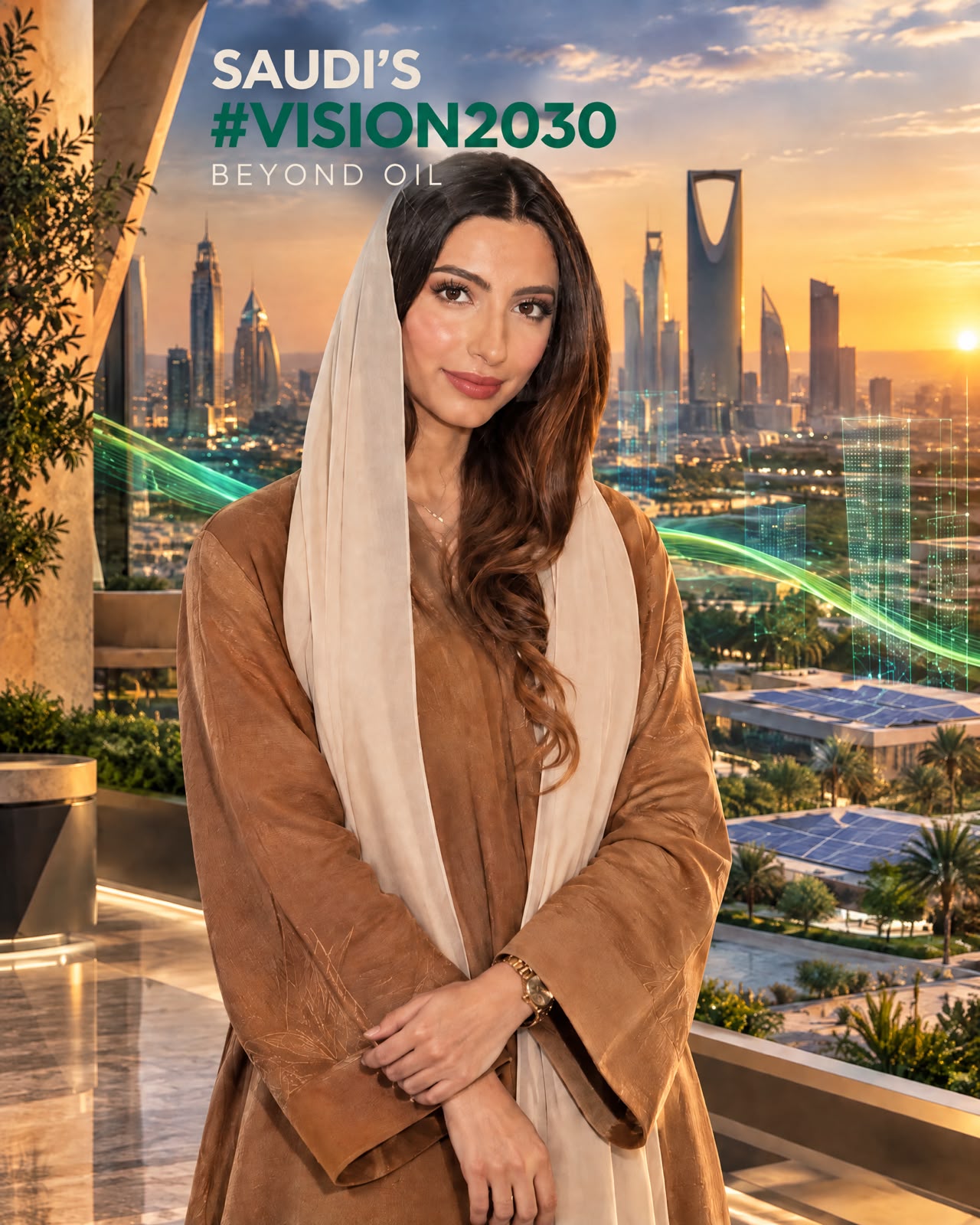
This is a statement of intent to move from an oil-led economy to a diversified, technology-led one. Climate and sustainability sit at the heart of that shift, not on the margins: Saudi Arabia's green building codes, net-zero data centre commitments, and national climate frameworks are being developed in parallel with its digital infrastructure, not bolted on afterward.
The Real Test Is Human, Not Technical
Building data centres, it turns out, is the easier part of this strategy. SDAIA's own analysis acknowledges that human capital is the binding constraint on the entire NSDAI programme: compute can be procured and models can be licensed, but trained AI engineers and PhD-level researchers cannot be bought off the shelf.
The Kingdom's response operates on three tiers: university-level AI faculties at institutions like KAUST and King Saud University, professional reskilling through bootcamps such as the Tuwaiq Academy's partnership with Stanford, and international recruitment backed by tax-free compensation packages. The SAMAI workforce literacy initiative alone has already reached more than one million participants in its first wave, with a second phase now covering eleven government ministries, while SDAIA reports more than 11,000 of its planned 20,000 AI specialists trained as of early 2026.
Even so, the honest assessment from close observers of the programme is that the talent gap remains large, and competition for senior AI engineers from US frontier labs, Chinese national champions, and the UAE's G42 continues to compress the Kingdom's hiring margins. Building the researchers, engineers, and sustainability leaders to run a genuine knowledge economy takes years of deliberate, sustained investment in people, not just in infrastructure.
Why Climate Strategy Can't Be an Afterthought
As Saudi Arabia builds some of the highest-density AI infrastructure in the world, the sustainability question becomes unavoidable rather than optional. Data centres of the scale the Kingdom is planning consume enormous amounts of power and water, which means the success of the country's AI ambitions is now directly tied to the success of its climate and energy strategy. Net-zero commitments on new data centre builds, green building standards, and national ESG reporting frameworks are no longer separate from the technology story. They are a precondition for it.
This is exactly where organisations across the Kingdom and the wider Gulf are finding they need outside expertise, not just internal policy teams. Few voices bring the scientific depth and the next-generation perspective to make that case as clearly as Areej Al-Muqbil Alqarni, a Saudi climate researcher, founder of Nasūn, and Columbia University I.I. Rabi Scholar working at the intersection of climate science, policy, and public communication.
Areej's research has taken her through institutions including KAUST, Harvard, MIT, and CERN, with a focus on environmental engineering and carbon capture technologies, work that has earned her more than 35 international awards. Shaped by her studies and research across Saudi Arabia, the United States, and Italy, she brings a rare cross-cultural perspective to the climate conversation, along with a clear belief that young Saudi researchers and engineers should be recognised as leaders in the Kingdom's transformation today, not just its talent pipeline for tomorrow.
That combination, deep technical credibility paired with a genuinely Saudi, next-generation vantage point, is precisely what the Kingdom's climate and diversification strategy needs more of as it scales. For event planners and leadership teams looking to ground a Vision 2030, climate, or future-of-science conversation in real research experience rather than borrowed expertise, Areej Al-Muqbil Alqarni's keynotes translate frontier climate science into a story the Kingdom can see itself in.
Book Areej Al-Muqbil Alqarni to speak at your next sustainability forum, innovation summit, or Vision 2030-focused conference. Enquire about her availability through MENA Speakers at info@mena-speakers.com or +971 54 995 4166.
The Road Ahead
Saudi Arabia's transformation from an oil-led economy to a data- and climate-led one is well underway, backed by tens of billions of dollars in committed capital and some of the most ambitious national AI targets in the world. But capital and compute are the easy variables to solve for. The Kingdom's own strategists are clear-eyed that talent, and the sustainability expertise to make growth genuinely durable, are what will determine whether Vision 2030's ambitions become reality or fall short of the target.
The infrastructure is being built. The question is whether the people, and the climate strategy to match, can keep pace.
MENA Speakers connects event planners and organisations across the region with keynote speakers whose expertise in AI, sustainability, and economic diversification is proven, current, and matched precisely to the demands of your event. Contact us at info@mena-speakers.com or +971 54 995 4166.