





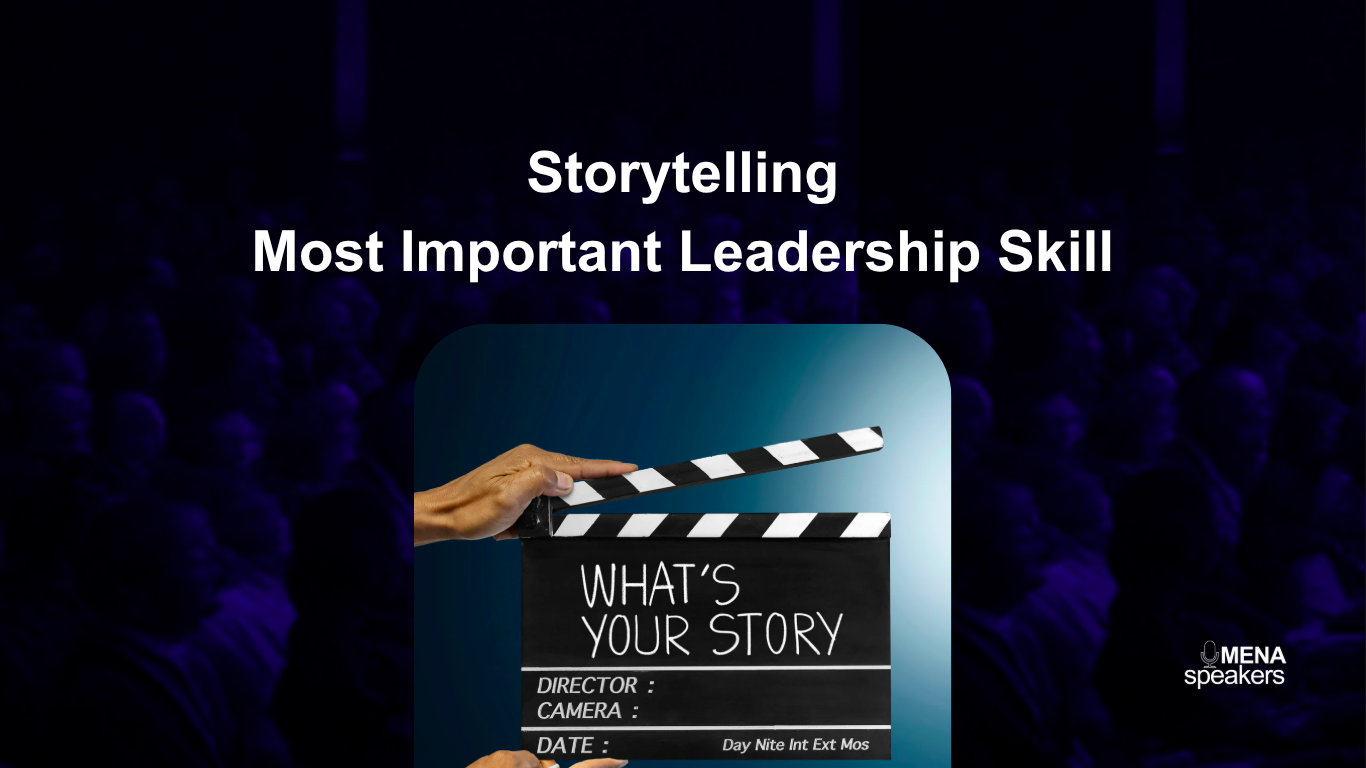
Discover 10 reasons storytelling is becoming the most critical leadership skill in 2026, driving influence, trust, and alignment in modern organisations.10 Reasons Why Storytelling Is the Most Important Leadership Skill in 2026
Across the Middle East and North Africa, organisations are navigating rapid change driven by digital transformation, cross-cultural teams, generational shifts, economic diversification, and increasing global competition. To navigate this complexity, leaders need expertise, proven results, and the ability to clearly articulate their vision, decisions, and impact.
Leaders who can craft and share compelling narratives are effective communicators, architects of alignment, catalysts for trust, and voices that shape organisational purpose and action, capabilities that are critical for the new-age leaders.
Storytelling is no longer an optional leadership skill. It is now one of the most important capabilities of our time, elevating strategy into shared meaning and turning influence into lasting impact.
In this article, we explore 10 reasons why storytelling will define effective leadership in 2026.
Why Storytelling Has Become a Non-Negotiable Leadership Skill
Here’s how storytelling has emerged as the connective tissue between vision and execution, strategy and people, and leaders and lasting influence:
1. Storytelling Cuts Through Information Overload
Today’s leaders are competing not only with other organisations, but with constant noise, dashboards, data points, emails, meetings, and AI-driven insights. Teams are not lacking information; they are lacking clarity. What leaders need are stories that provide focus and meaning.
Storytelling helps leaders distill complexity into clear narratives, turning abstract strategies and overwhelming data into messages people can understand, remember, and act on. In 2026, effective leaders will be recognised not by how much information they share, but by how clearly they frame the right message in a way that cuts through distraction and creates focus.
2. Leaders Need Narratives to Align Teams in Hybrid, Distributed Environments
As hybrid and distributed work models become the norm rather than the exception, alignment cannot rely only on proximity, supervision, or constant check-ins. Teams spread across locations, time zones, and cultures need a shared narrative that explains what they are working towards and why it matters.
Storytelling provides leaders with a consistent thread that connects individual roles to a broader mission, creating clarity and cohesion even when teams are not in the same room. Strong narratives play a central role in holding modern, flexible organisations together.
3. Stories Build Trust Faster Than Data Alone
Data can inform decisions, but it rarely builds belief on its own. Trust is formed when people understand context, intention, and human experience, all of which are carried through stories. When leaders share real narratives about challenges, decisions, and outcomes, they signal transparency and authenticity, not just authority.
In a region where relationships remain central to business and leadership, storytelling helps bridge emotional distance and establish credibility more quickly than numbers ever could. So, leader | MENA Speakerss who rely solely on data will struggle to inspire confidence, while those who combine insight with story will earn trust at speed.
4. Storytelling Humanises Strategy and Change
Strategy and transformation initiatives often fail not because they are flawed, but because they feel distant, abstract, or imposed. Storytelling allows leaders to translate high-level plans into human terms, removing leadership jargon and showing how change affects people, progress, and purpose.
By framing strategy as a journey rather than a directive, leaders help teams see the role they play within the story and the impact they create within their departments. Organisations across the MENA region will continue to evolve at an unpredictable pace, and leaders who humanise change through storytelling will be the ones building stronger buy-in, resilience, and momentum.
5. It Improves Message Retention and Recall
In leadership communication, impact is shaped by what people remember and apply. When attention is divided and information is constant, facts and instructions are easily forgotten. Stories create structure and emotional relevance, making messages easier to retain and recall long after the conversation ends.
When leaders anchor priorities, values, or lessons within a narrative, they increase the likelihood of those messages guiding decisions and behaviour. In 2026, effective leadership communication will be defined by messages that stay with people over time and influence how they think and act.
6. Stories Help Leaders Influence Without Authority
Modern leadership often requires influence beyond formal titles and reporting lines. Shifts in workforce expectations, work patterns, and organisational structures mean leaders frequently need buy-in without direct control. Cross-functional teams, partnerships, and matrix structures make influence a core leadership requirement rather than a situational one.
In these contexts, storytelling becomes a powerful tool. It allows leaders to shape perspectives, align interests, and inspire action without relying on directives. By sharing stories that reflect shared goals, past successes, or meaningful outcomes, leaders can influence through connection rather than command. The ability to lead through narrative will continue to distinguish trusted leaders from purely positional ones.
7. It Bridges Cultural and Generational Gaps
Workplaces across the MENA region are very diverse, bringing together multiple nationalities, cultures, and generations within a single organisational umbrella. Communication styles and expectations may vary, but stories offer a shared language that can bridge these differences.
Well-crafted stories convey values, lessons, and intent without dependence on jargon or assumptions. Leaders can use storytelling to create common ground, encourage understanding, and strengthen connections across diverse teams. Leaders who unite people through narrative are better positioned to build inclusive, high-performing cultures.
8. Storytelling Supports AI-Era Leadership Communication
AI adoption is set to accelerate across industries and roles in 2026, taking on greater responsibility across analysis, reporting, execution, and more. As this shift reshapes how work is done, the human dimension of leadership becomes even more critical.
What technology cannot replace is a leader’s ability to provide meaning, context, and direction. Storytelling enables leaders to interpret AI-driven insights through a human lens, clarifying what the data indicates, why it matters, and how people should respond. Leadership communication in the AI era will be defined by this balance, using storytelling to complement technology and turn intelligence into understanding and action.
9. Leaders Use Stories to Make Uncertainty Navigable
When people lack context or direction, uncertainty often leads to anxiety. During periods of change or disruption, leaders may not always have definitive answers that would provide context to everyone, but they can provide clarity through narrative.
Stories help frame uncertainty as a process rather than a threat, offering perspective on where the organisation has been and where it is heading. Through storytelling, leaders can acknowledge challenges, reinforce purpose and possibility, and steady teams with a sense of direction. Leaders who navigate uncertainty effectively are those who guide others with honest, grounding stories.
10. It Turns Vision Into Something People Can Act On
Vision without action remains aspirational at best. Storytelling bridges the gap between long-term ambition and everyday decision-making by showing what the vision looks like in practice.
Through stories, leaders translate abstract goals into concrete behaviours, examples, and choices that people can apply in their own roles. This makes vision tangible, relevant, and actionable, not just inspirational. In 2026, leaders who can embed vision into daily work through storytelling will be the ones who turn intention into measurable progress.
Conclusion
In 2026, effective leadership will be defined by the ability to create meaning, alignment, and momentum in hyper-complex environments, not just authority. Storytelling sits at the centre of this shift, enabling leaders to cut through noise, connect diverse teams, and translate vision into action.
For organisations across the MENA region, storytelling is no longer simply a communication tool. It is a leadership capability that shapes culture, builds trust, and supports long-term impact, one that leaders can intentionally develop and refine.
MENA Speakers provides one-to-one coaching for leaders seeking to strengthen their storytelling and leadership communication skills.