




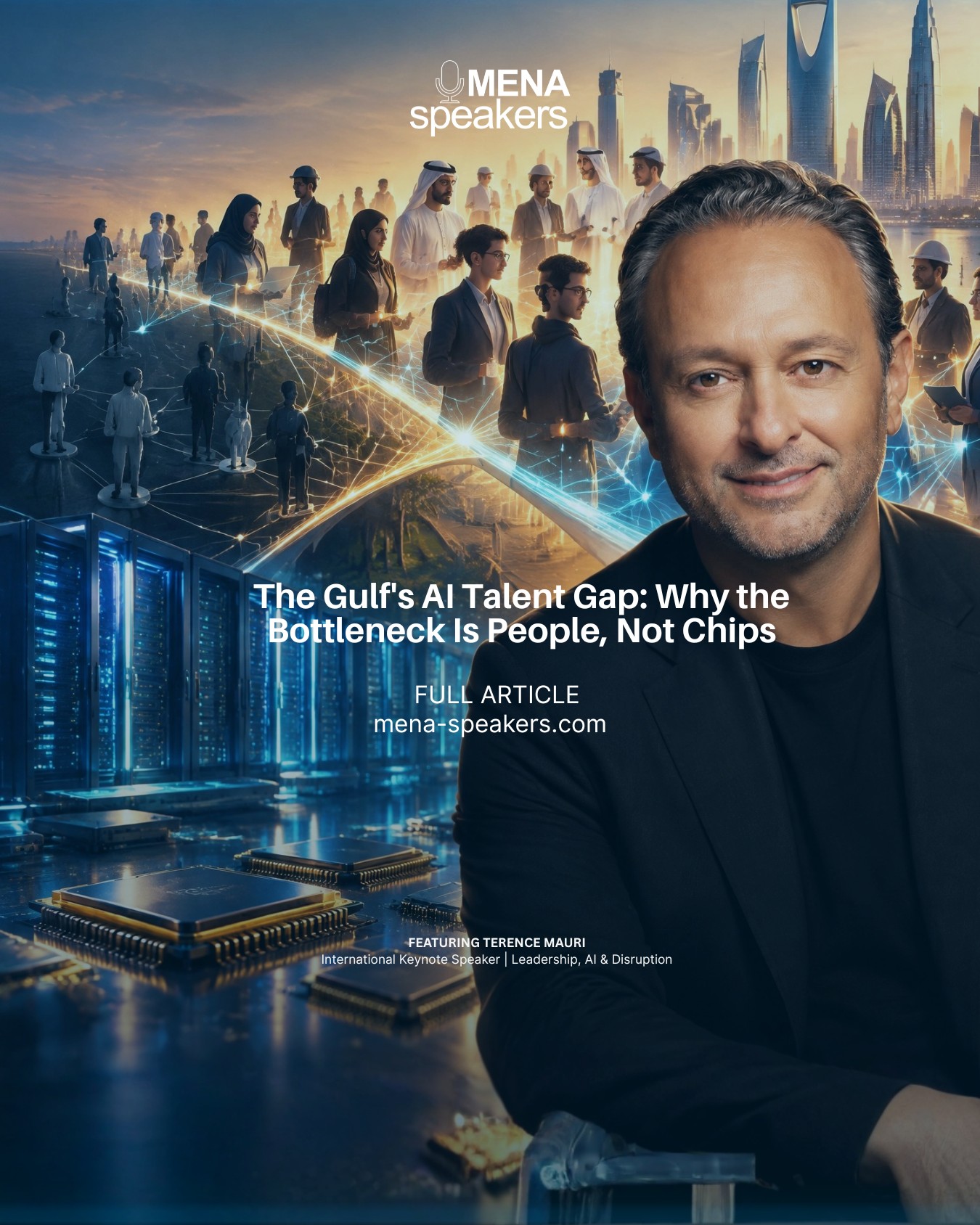
The Gulf has made artificial intelligence a national priority. Saudi Arabia and the UAE are pouring billions into data centres, sovereign large language models, and Arabic-first AI technologies. Yet the biggest obstacle to realising that ambition is not compute or capital. It is people.
The Numbers Behind the Gulf's AI Skills Gap
McKinsey's research into AI adoption across the GCC found that talent, not technology, is the leading barrier: 70% of surveyed companies say they do not currently have the AI talent they need, and organisation-and-talent issues rank as the single biggest challenge to scaling AI, ahead of data, technology, and strategy combined.
A 2026 Korn Ferry study of 105 organisations across Saudi Arabia, the UAE, Qatar, Oman, Bahrain, and Kuwait sharpens the picture further. While AI adoption momentum across the region is strong, workforce readiness has not kept pace: just 1% of firms consider themselves fully AI-ready, 30% say they are not ready at all, and 42% of respondents are not hiring for AI roles at all, even as demand for AI skills grows.
The infrastructure is being built faster than the workforce can use it.
Why Reskilling Is Now Urgent, Not Optional
According to the World Economic Forum's Future of Jobs Report 2025, 41% of core skills in UAE jobs are projected to change by 2030, slightly above the 39% global average, and 87% of UAE employers now expect rising demand for technological literacy. In Saudi Arabia, 70% of employers say technological literacy is an increasingly important skill for their workforce, underscoring that this shift is not confined to any one Gulf economy.
This is not a technology story. It is a skills story, touching every level of the organisation, from entry-level hires to the boardroom. And the boardroom may be where the gap matters most: leadership teams that cannot evaluate AI investments, understand AI risk, or ask the right questions of their technical teams will struggle to deploy capital effectively, no matter how advanced the underlying models are.
Turning Existing Teams Into AI-Ready Teams
The organisations that win the Gulf's AI race will not be the ones that buy the most models or sign the biggest cloud contracts. They will be the ones that turn their existing workforce into an AI-ready workforce through disciplined, sustained upskilling.
That means treating reskilling as a leadership priority rather than an HR line item: setting clear AI literacy expectations at every level, investing in structured training rather than one-off workshops, and building career paths that make AI skills a genuine route to advancement, not just a compliance checkbox. Adaptability and enterprise-wide buy-in matter more than any single certification or credential.
A Leadership Perspective on Future Readiness
Few voices connect the leadership stakes of this shift as sharply as Terence Mauri, founder of Hack Future Lab, an MIT Entrepreneur Mentor in Residence, and one of the world's most sought-after voices on leadership, AI, and disruption. Recognised by Thinkers50 as an influential voice on the future of leadership, Terence has advised organisations including Google, HSBC, and Pfizer on how to turn disruption into a genuine competitive advantage rather than a threat to manage.
In his keynotes, Terence argues that the biggest risk facing Gulf organisations is not moving too fast on AI, but standing still while the world moves around them. His work reframes the talent gap not as a hiring problem to be solved with more headcount, but as a leadership and mindset shift: building what he calls "future readiness" into every level of an organisation, so teams can adapt as fast as the technology itself changes.
For leadership teams and event planners looking to move an AI or future-of-work conversation beyond statistics and into what leaders should actually do next, Terence Mauri's keynotes offer a compelling, practical framework grounded in two decades of advising organisations through disruption.
Book Terence Mauri to speak at your next economic forum, leadership summit, or future-of-work conference.
Enquire about his availability through MENA Speakers at info@mena-speakers.com or +971 54 995 4166.
The Gulf is not short on ambition, capital, or infrastructure. What it needs now is a workforce that can match the pace of its own investment. Closing that gap will take sustained reskilling, clear-eyed leadership, and a willingness to treat talent development as seriously as any technology roadmap.
MENA Speakers connects event planners and organisations across the region with keynote speakers whose expertise in AI, economics, and workforce strategy is proven, current, and matched precisely to the demands of your event.
Contact us at info@mena-speakers.com or +971 54 995 4166.