7 Ways to Build a Speaker Lineup That Tells a Cohesive Story
The most impactful events feel intentional - thoughtfully designed, well-connected, and anchored by a clear story. They unfold with purpose, where each speaker builds on the last one, and the audience understands not only the topic but why it matters now.
When speaker lineups are treated as schedules, events often feel fragmented: individual talks may be strong, but they lack a lasting narrative.
But when lineups are treated as narratives, events gain clarity, momentum, and meaning. Every speaker becomes a chapter, every transition feels deliberate, and each insight is easier to absorb.
In an era of limited attention and high expectations we live in, a cohesive speaker story is the need of the hour for companies that want to make their events stand out or unforgettable.
This blog post outlines seven ways to build a speaker lineup that tells a clear, cohesive story from start to finish.
Ways to Build a Speaker Lineup That Tells a Cohesive Story
A cohesive speaker lineup is built through intentional curation, where each speaker is chosen not just for their expertise, but for how their perspective moves the event’s story forward. Here’s how you can do the same:
1. Start With a Clear Narrative Arc
A speaker lineup works best when it follows a deliberate beginning, middle, and end. Speakers should not be chosen independently; instead, organisers should think about how ideas need to unfold across the event. A clear narrative arc helps map that journey from opening context to final takeaway, making sure the event carries on with purpose, and each session flows naturally into the next, like a carefully crafted collection.
A useful structure is to let opening sessions set context and establish shared understanding, use the middle of the programme to deepen thinking and introduce perspective shifts, and close by synthesising insights and pointing toward action. This approach helps audiences stay oriented and experience the event as a cohesive whole rather than a series of standalone talks.
For instance, a leadership summit may begin by framing global or regional shifts, move into how those changes affect organisations on the ground, and conclude with how leaders must respond and what comes next. Each speaker plays a defined role in advancing the story, not restarting it or introducing a whole lot of new ideas that are disconnected.
2. Balance Vision With Practical Insight
A cohesive speaker lineup moves fluidly between future-focused thinking and real-world application. Visionary perspectives help audiences understand what’s changing and why it matters, while practical insight grounds those ideas in reality. When lineups lean too heavily in one direction, events can feel either aspirational without direction or tactical without inspiration.
Balancing both makes sure the narrative remains credible, engaging, and actionable throughout the programme. Vision sets ambition, and practical insight shows how that ambition can be realised.
For example, a speaker outlining long-term industry shifts can be followed by a leader sharing how those shifts are being addressed within their organisation today. Together, they bridge possibility and practice.
3. Avoid Redundant Perspectives
A strong speaker lineup is designed to move thinking forward and introduce new angles at every stage, not revisit the same point from different podiums. While consistency in theme is important, repetition in perspective can make an event feel static. Audiences quickly recognise when ideas are being recycled, even when speakers are credible, and attention begins to drop.
Even when speakers address the same theme, their viewpoints should add depth rather than repetition. Only such a varied lens on the topic can keep the conversations moving forward. To avoid redundancy, look beyond titles and topics to understand what new thinking each speaker brings to the narrative.
For instance, if the event theme is digital transformation, one speaker might explore the strategic rationale behind change, another might examine its cultural impact, and a third might address execution challenges. Each session builds on the last, offering progression and a fuller understanding rather than déjà vu.
4. Sequence Energy Intentionally
Energy is not just about how engaging a speaker is, but about how sessions are arranged across the event. Attention and energy naturally rise and fall, and a well-curated lineup accounts for cognitive load, attention span, and emotional pacing, managing these shifts thoughtfully throughout the programme.
When high-intensity sessions are stacked together or reflective sessions are poorly placed, audiences can disengage despite strong content. Sequencing energy intentionally helps maintain focus, allowing ideas to land and momentum to build naturally.
For example, a high-energy keynote may work best at the start to set momentum, followed by a more reflective discussion or case-based session that gives the audience time to process ideas before moving into the next phase of the event.
5. Use Moderators Strategically
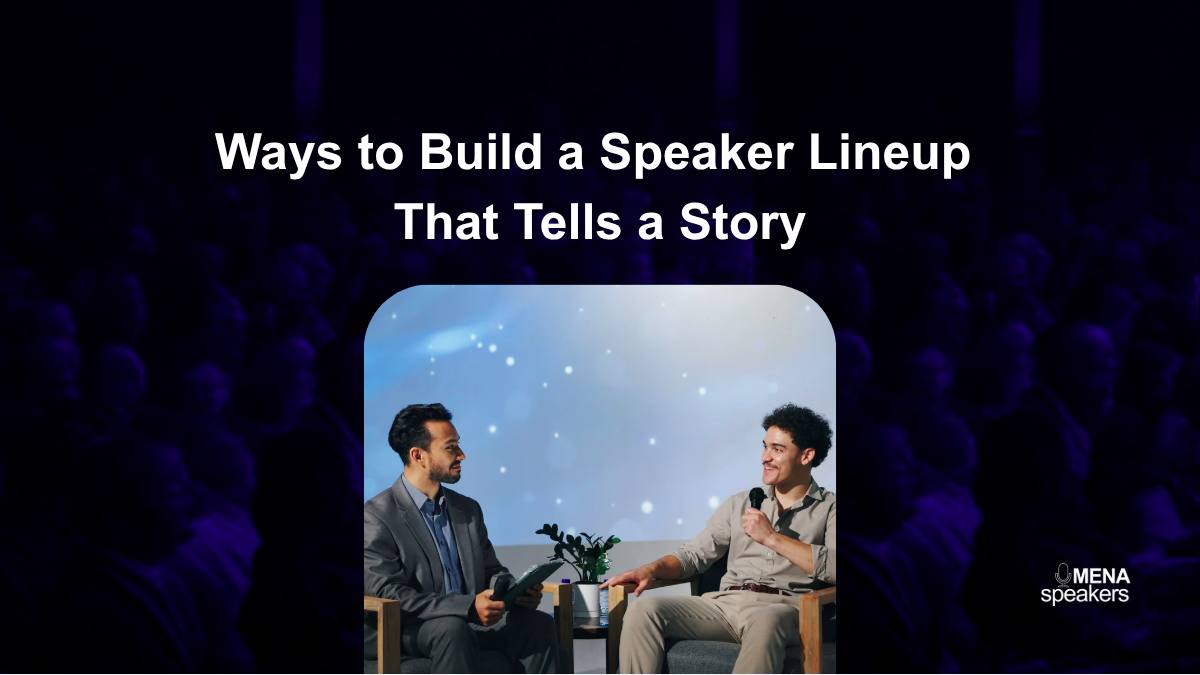
Moderators play a critical role in shaping the event’s narrative and maintaining coherence across a speaker lineup. Beyond managing time and introductions, they guide the audience through the story by drawing connections between sessions, framing key questions, and reinforcing central themes.
A strong moderator creates continuity, making transitions between sessions feel seamless and intentional. Used strategically, moderators help ensure conversations align with the event’s purpose rather than drifting in different directions.
For example, a skilled moderator can reference insights from earlier sessions during a panel discussion, helping the audience see how different perspectives connect to one another and to the event’s overarching story.
6. Align Topics to the Audience Journey
A well-designed speaker lineup reflects how audiences naturally process information over time. Early in an event, participants are orienting themselves, like understanding the landscape, challenges, and context, so opening sessions should focus on building shared understanding. As the event progresses, audiences are better prepared to engage with deeper insights, differing viewpoints, and practical implications.
Aligning topics to this journey ensures sessions meet the audience where they are, rather than overwhelming them too early or under-serving them later. The content should evolve alongside the audience’s mindset.
For example, an event might begin by framing key issues or trends, move into discussions around impact and response, and conclude with sessions focused on leadership decisions and future direction.
7. End With Action, Not Applause
How an event concludes shapes what the audience takes away from it. Inspirational closing sessions can create a strong emotional response, but they don’t always translate into lasting impact. Ending with action means helping audiences synthesise what they’ve heard and understand how to apply it.
Whether it’s a shift in thinking, a leadership priority, or a concrete next step, action-focused endings ensure the event’s value extends beyond the room.
For instance, a closing session might connect key insights from earlier speakers and challenge the audience to consider what changes they will make as a result. The focus shifts from appreciation to application.
Conclusion
Building a cohesive speaker lineup is not about filling time slots, but about shaping an experience with intention and flow.
When speakers are curated around a clear narrative, events become more focused, engaging, and impactful for both audiences and organisers.
MENA Speakers works closely with organisations to curate speaker lineups that align with purpose, audience, and outcomes. If you’re looking to design an event that tells a clear story from start to finish, our platform can help bring structure and meaning to every stage.