




A Generic Speaker Is an Expensive Gamble
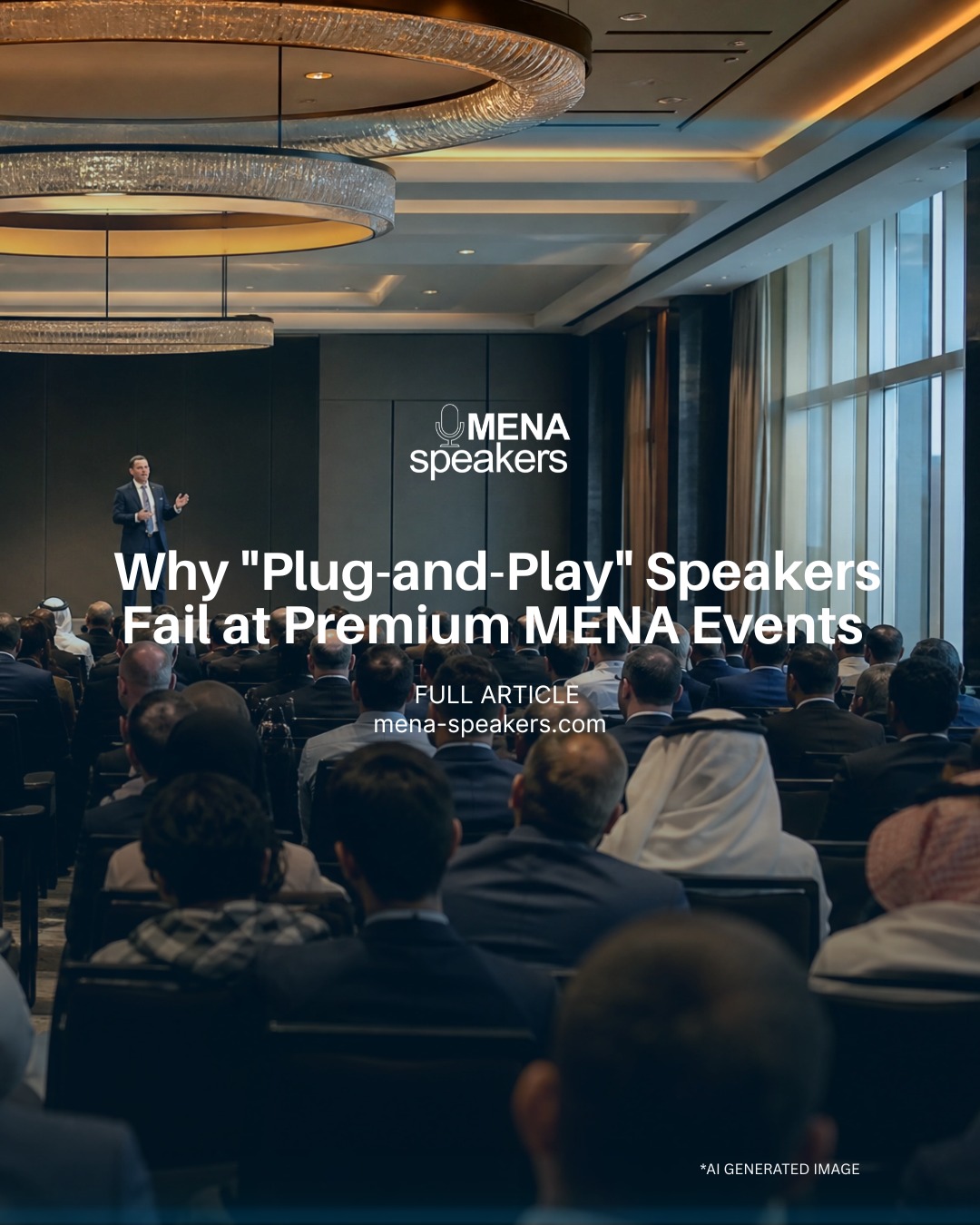
Anyone who has organized a high-profile conference, summit, or corporate gathering in the MENA region has seen this scene play out. The speaker walks on stage. The deck is polished. The delivery is technically sound. And yet the room never quite engages, because nothing in the talk suggests the speaker is actually addressing this audience, in this market, at this moment. It could have been delivered anywhere, to anyone.
Industry insiders have a name for it: the "plug-and-play" keynote. It is far more common than most event organizers realize, and far more costly than it appears at first glance.
In the GCC, the margin for error is narrower still. A speaker who has not taken the time to understand the cultural context, language preferences, or business landscape of their audience will misjudge the room. A Saudi corporate gathering calls for a different register than a Dubai tech conference, which differs again from a Cairo leadership summit. When that nuance is missing, the talk feels imported rather than relevant, and the event quietly underdelivers on the investment made to bring that speaker in.
For event planners, this is more than an awkward afternoon. It is a reputational risk. Sponsors notice. Attendees remember. And the next budget conversation becomes harder to win.
Why It Keeps Happening
The pattern repeats for a few structural reasons:
Late bookings. Engagements are often finalized too close to the event date, leaving no real window for briefing or content customization.
No structured intake process. Organizers go directly to a speaker without a defined process for sharing audience data, event goals, and regional context.
No one owns the gap. There is frequently no one positioned between the speaker's material and the realities of the room to ensure the content is genuinely tailored rather than merely well delivered.
Customization, Not Just Booking
The fix is not avoiding premium speakers. It is working with a partner who treats sourcing as a process rather than a transaction.
Every engagement should begin with understanding the event itself: the audience, the industry, the language mix, the cultural tone, and the outcome the client is actually after. From there, the right partner draws on a network of prominent Arab figures and regional thought leaders, individuals who already understand the texture of speaking to MENA audiences, sourced through a dedicated speakers bureau rather than ad hoc outreach, and matched to the brief instead of the brief being fitted to whoever happens to be available.
What happens before the speaker steps on stage matters just as much as the talk itself. A well-managed speaker management process includes proper briefing calls, audience research shared in advance, and a clear, mutual understanding of how the content should be adapted.
Questions Worth Asking Before You Book
A few questions tend to reveal whether an event is getting a tailored experience or a plug-and-play one:
Has the speaker, or their team, asked for information about the audience and event goals?
Is there a briefing process built into the booking, or does the engagement effectively end once payment is confirmed?
Does the speaker have genuine, demonstrable experience with MENA audiences specifically?
The Takeaway
The answers separate speakers who perform from speakers who deliver value. For organizers paying premium fees, that distinction is the entire point.
If you are planning your next event and want a speaker matched to your audience, MENA Speakers can help you find the right fit from a network of leading Arab voices and regional experts.